-
 Publications
From PLC Talk to PLC Transfer
Most schools say they “do PLCs.” Usually, that means teams meet regularly, review data, share ideas, and talk about students. Those things matter. But none of them guarantee professional learning, and that gap is why so many PLCs fail to move the needle on classroom practice or student achievement. -
 Publications
Chasing Points or Chasing Learning: A Shift in Focus
“How many points is this worth?” “Are you going to grade this?” “Can I do something for extra credit?” These were questions I repeatedly heard from my students. Maybe you’ve heard them too. They weren’t trying to be difficult. They were just doing what they had been conditioned to do – to use points to understand the value of their work. Somewhere along the way, we unintentionally taught students that success in school was more about collecting points than learning. Of course, that was never our goal. But when points and grades become the focus of our conversations with students, the importance of learning becomes secondary. -
 Publications
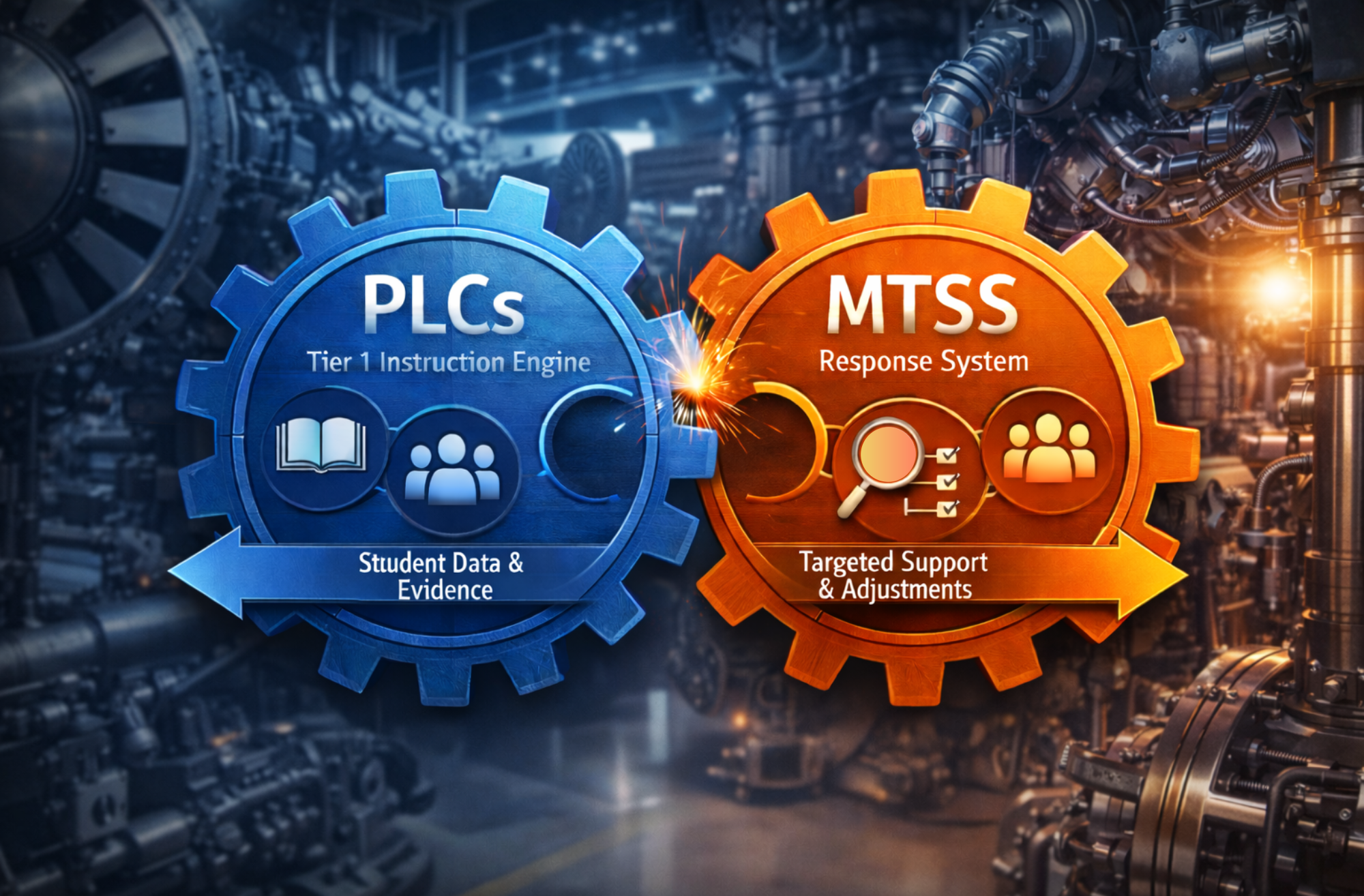
From PLC Meetings to Instructional Reliability – What High-Reliability Organizations Teach Us About Coherent School Improvement
This article argues that the persistent struggle of Professional Learning Communities (PLCs) and Multi-Tiered Systems of Support (MTSS) is not a lack of belief, effort, or expertise among educators, but a problem of operating-model design. Drawing carefully from high-reliability organizations—specifically GE Aerospace’s FLIGHT DECK operating model—the author reframes PLCs not as meetings or initiatives, but as Tier 1 instructional engines that must reliably produce improvement through disciplined collaboration and follow-through. -
 Publications
What’s Worth Fighting Against in Grading
In his classic book What’s Worth Fighting for in the Principalship identified a dozen action items for principals and school systems that remain as relevant today as they were almost a decade ago.
-
 Publications
Taking the Grading Conversation Public
Suggesting grading reform can be risky business. Here’s how to keep the discussion productive and on track.
-
 Publications
The Case Against the Zero
Why the zero on the 100-point scale is inaccurate and destructive.
This is not a trick question. If you are using a grading scale in which the numbers 4, 2, 2, 1 and 0 correspond to grades of A, B C, D and F, then what number is awarded to a student who fails to turn in an assignment?
-
 Publications
The Futility of PLC Lite
Why PLCs Fail to Meet their Potential
Although many schools around the world have claimed to embrace the professional learning community (PLC) process, it would be more accurate to describe the current state of affairs in many schools as PLC Lite. Educators rename their traditional faculty or department meetings as PLC meetings, engage in book studies that result in no action, or devote collaborative time to topics that have no effect on student achievement — all in the name of the PLC process.
-
 Publications
Uninformative Assessment
Districts are making huge investments in testing and assessments, but make sure you are using insight to act on the results instead of just looking at the data
-
 Publications
Using Student Learning in Teacher Assessment
A strategy for building a strong collegial culture while taking student learning into account in assessing teachers.

Articles
CLS colleagues regularly publish on relevant topics for busy educators. Whether it is a book, article, or blog, each contains facts and practical next steps for practitioners. As with all our resources, please share with colleagues and communities.