
Solutions
Master Scheduling
Turn Your Master Schedule into a Strategic Advantage

Master scheduling is more than a
logistical exercise
It’s a strategic tool that shapes instructional quality, equity, and daily teaching and learning. Creative Leadership Solutions (CLS) partners with school and district leaders to design master schedules that align priorities, maximize instructional time, and better serve both students and educators.

How it Works
From Puzzle to Purpose
- Analyze your current schedule through an instructional and equity lens
- Align scheduling decisions to academic goals, staffing realities, and student needs
- Explore flexible scheduling models that support intervention, enrichment, and electives
- Design schedules that enable collaboration, PLCs, and coaching time
- Stress-test schedules for sustainability amid enrollment or staffing changes
Schedules That Serve Students
- Increased access to targeted supports and high-impact instruction
- Improved use of time, staff, and resources
- Reduced conflicts, inefficiencies, and last-minute disruptions
- Stronger alignment between instructional vision and daily practice
- Greater clarity and confidence for leaders, teachers, and counselors

Frequently Asked Questions
-
Do you help with scheduling at different school levels?
Yes. CLS supports master scheduling across elementary, middle, and high school settings, as well as at the district level. While the structures and constraints differ by level, the core principles of effective scheduling remain the same: protecting instructional time, ensuring equitable access to learning opportunities, and creating space for collaboration and targeted support. -
What if my school context is unique?
Every school’s scheduling context is unique. CLS approaches master scheduling with a deep understanding of real-world constraints, including staffing patterns, contractual agreements, student needs, program requirements, and district priorities. Rather than offering a one-size-fits-all template, we work collaboratively with scheduling teams to analyze the current schedule, identify instructional challenges, and design solutions that are both realistic and impactful within your specific context. -
What makes the CLS approach to master scheduling different?
CLS begins master scheduling by grounding in vision and mission and a clear articulation of core beliefs about teaching, learning, and student access. Before working with data or building schedules, we help scheduling teams identify the instructional values and priorities that should guide scheduling decisions. From there, data analysis and structured reflection are used to surface challenges and opportunities within current schedules and practices. Rather than treating scheduling as a technical task, CLS draws on proven principles and examples from effective schools to design schedules that intentionally align with beliefs, address identified needs, and support high-quality instruction, collaboration, and student access.
Related Resources
-
 Collaborative Learning Teams: PLCs Done Right
From PLC Talk to PLC Transfer
Most schools say they “do PLCs.” Usually, that means teams meet regularly, review data, share ideas, and talk about students. Those things matter. But none of them guarantee professional learning, and that gap is why so many PLCs fail to move the needle on classroom practice or student achievement. -
 Grading Reform
Chasing Points or Chasing Learning: A Shift in Focus
“How many points is this worth?” “Are you going to grade this?” “Can I do something for extra credit?” These were questions I repeatedly heard from my students. Maybe you’ve heard them too. They weren’t trying to be difficult. They were just doing what they had been conditioned to do – to use points to understand the value of their work. Somewhere along the way, we unintentionally taught students that success in school was more about collecting points than learning. Of course, that was never our goal. But when points and grades become the focus of our conversations with students, the importance of learning becomes secondary. -
 Collaborative Learning Teams: PLCs Done Right
From PLC Meetings to Instructional Reliability – What High-Reliability Organizations Teach Us About Coherent School Improvement
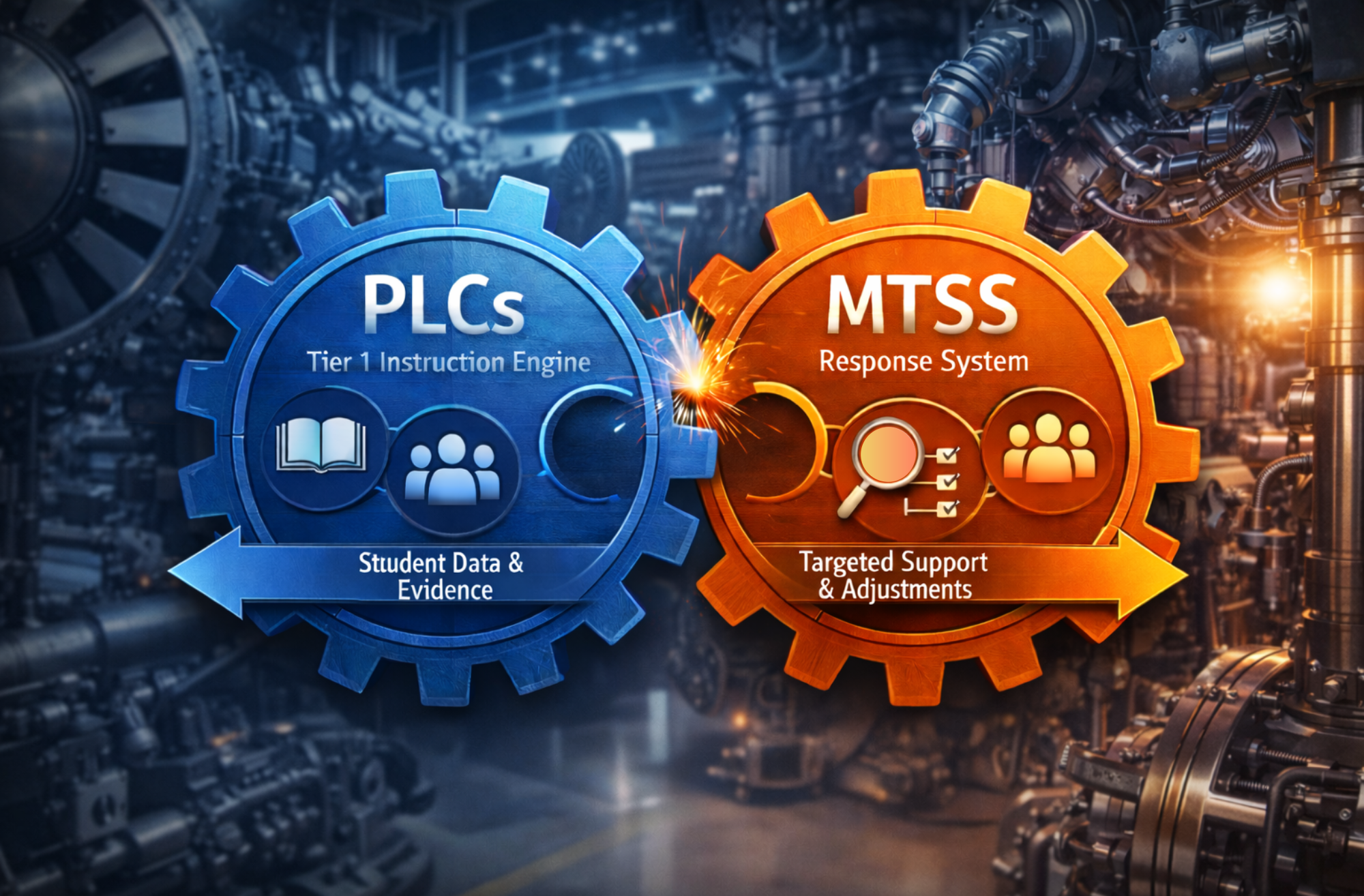
This article argues that the persistent struggle of Professional Learning Communities (PLCs) and Multi-Tiered Systems of Support (MTSS) is not a lack of belief, effort, or expertise among educators, but a problem of operating-model design. Drawing carefully from high-reliability organizations—specifically GE Aerospace’s FLIGHT DECK operating model—the author reframes PLCs not as meetings or initiatives, but as Tier 1 instructional engines that must reliably produce improvement through disciplined collaboration and follow-through.
Focus on what matters. Let us help you grow.
Our experts have decades of experience in K-12 education and administration and are dedicated to delivering personalized and differentiated learning opportunities to help your team grow.