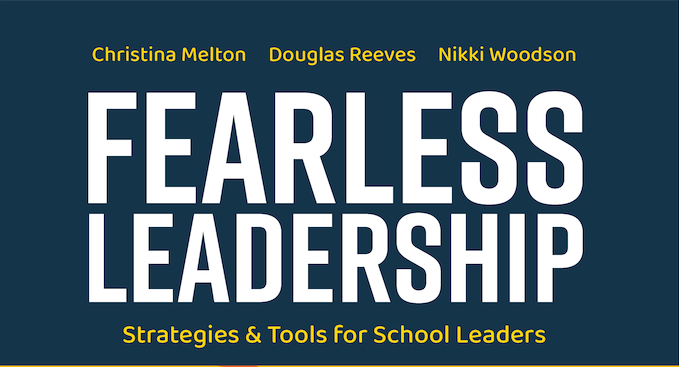
Here is a quick excerpt from my new book, Fearless Leadership, that might be useful in your discussions with school and district leaders. It has to do with how leaders and governing board members can deal with public participation in board meetings:
We follow the principle to first seek to understand, and then seek to be understood. We believe all constituents deserve both a vote and a listening ear. We also believe all constituents deserve to be safe from threats by those who disagree. We welcome vigorous yet respectful debate, and the rules of civil discourse will be enforced as we do so.
-
The purpose of public comments during governing board meetings is to allow citizens of the district to share their ideas and for the board and district leadership to learn from those citizens. We welcome different opinions, vigorously argued, provided that the expressions of those opinions fall within the boundaries of civil discourse as outlined in this policy.
-
Speakers at governing board meetings must be district residents and provide proof of residency when they submit their names for recognition during the public comment period.
-
Speakers must address an educational issue directly relevant to this school system. General political speeches not related to education are not relevant to the decisions of the governing board.
-
Speakers may not make any threats, explicit or implied, to any staff member or board member either inside or outside the meeting, either directly or indirectly, or either in person or via any electronic means, such as social media.
-
By signing into the application to speak at public meetings, the applicant agrees to abide by these policies and agrees to be ejected from the meeting if the applicant fails to abide by these policies.
Here is a link to a timely read from Forbes – https://www.forbes.com/councils/forbescoachescouncil/2025/04/11/leading-learning-lucky-and-losing-a-framework-for-business-and-education-leadership/