-
 Blogs
BlogsReducing Secondary Failures NOW: Learn How a California District Changed For Students
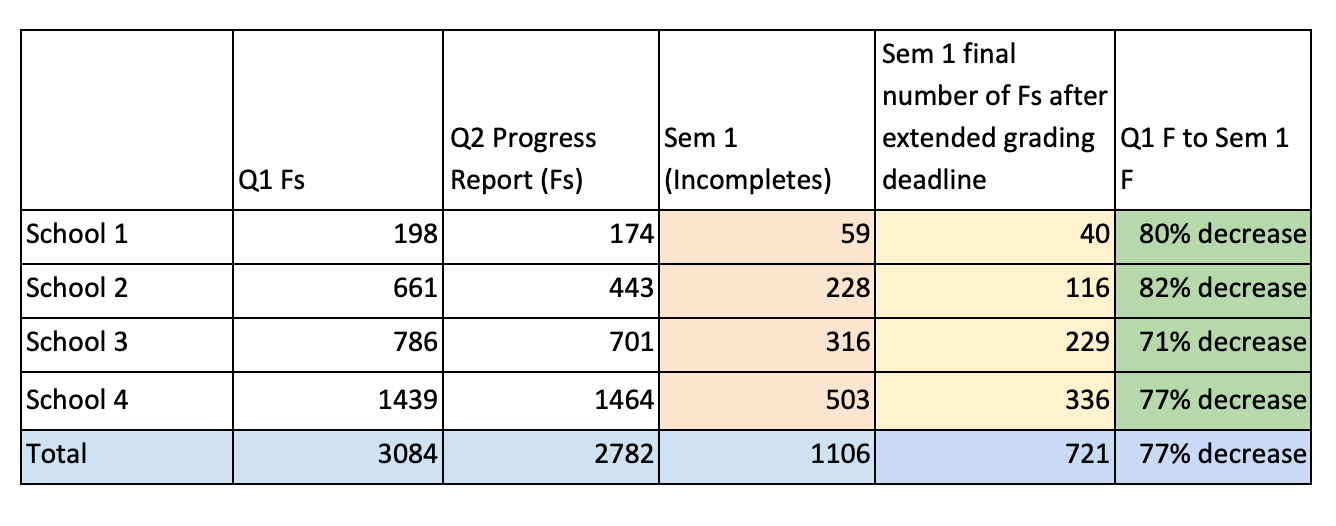
Monterey Peninsula Unified School District (MPUSD) is the proud home to three comprehensive high schools and one alternative high school serving approximately 3,170 students. MPUSD, like many districts across the country, has worked incredibly hard to begin the new year and the new semester, and we have much to celebrate. Over the course of the first semester and with an extended grading window, the four high schools in MPUSD collectively reduced the number of Fs by 77%.
-
Blogs
Relentless Communication Leads to a Dramatic Improvement in Attendance
Monterey Peninsula Unified School District (MPUSD) is the proud home to three comprehensive high schools and one alternative high school serving approximately 3,170 students. MPUSD, like many districts across the country, has worked incredibly hard to begin the new year and the new semester, and we have much to celebrate. Over the course of the first semester and with an extended grading window, the four high schools in MPUSD collectively reduced the number of Fs by 77%.
-
Blogs
Stop Tinkering with Negative Discipline Practices and Start Shifting to Positive Ones
A recent study by the Civil Rights Project at UCLA confirms what many of us have long suspected: American middle and high schools are losing a shocking number of instructional days to suspension. Using discipline data collected from almost every U.S. school district, the study found that 28 districts lost more than a year of learning to this draconian discipline practice. And what populations were most affected? You guessed it: Black students and students with disabilities were disproportionately deprived of the opportunity to learn in the name of suspension.
-
Blogs
Student failure is a burning building, and we need to show them the exit
The pandemic numbers continue to be grim, but we must be relentless in our support of student learning. While it is true that COVID-19 is a matter of public safety, so is literacy. If we do not revert the looming dropout time bomb, the public health crisis associated with dropouts will last for generations.
-
Blogs
How To Stop The Coming Dropout Time Bomb
Schools are facing an avoidable crisis – students dropping out of high school because of toxic policies that lead to a cascading series of failures that will undermine any reason for them to persist in their studies. When students to fail to complete high school, they face a lifetime of unemployment, poverty, increased health care needs, and greater involvement in the criminal justice system. If these students were inside a burning building, we would not convene focus groups, hire consultants, or begin a strategic plan. We would get them out of the burning building. There are only a few weeks left in the fall of 2020 to decide how to respond to this crisis.
-
Blogs
Digital Equity: Five Essential Weekly Indicators
This is the first in a series of brief articles about digital equity. Each week, we will provide educators and leaders with an immediately applicable strategy that will help students, teachers, and leaders focus on what matters most.
-
Blogs
Five Ways to Support Emotional Connections Between Students and Teachers
In my live and virtual travels around the country, one consistent concern I am hearing is the difficulty of establishing and maintaining emotional connections between teachers and students. We can’t wait for schools to resume live instruction for this vital part of learning. Here are five ideas you can apply right now.
-
Blogs
Classroom Visits in a Virtual Environment
Classroom observations can be a key strategy for improved teaching and learning, provided that they are conducted in a manner that gives teachers constructive and immediately applicable feedback as well as a chance to engage in a substantive conversation about their work with students and colleagues.
-
Blogs
Don’t Forget the “L” in SEL
In the fall of 2020, schools are opening in a season of continuing trauma for students, families, and staff members. The deaths and illnesses of family, friends, and colleagues are perpetual reminders of how fragile life is and how the emotional needs of children and adults are a central responsibility of educational leadership.
-
Research Wednesday
Federal Government and Local Curriculum Policies
A strategy for building a strong collegial culture while taking student learning into account in assessing teachers.
-
Blogs
You Can’t Do Everything
We have interacted with thousands of school leaders and educators since COVID-19 essentially closed every school in the nation. In call after call, webinar after webinar, and video meeting after video meeting, these educators have expressed a growing belief that the start of the 2020-2021 school year will be anything but normal. Most anticipate there will be some form of remote learning involved even if students are able to physically attend school.
-
Blogs
Looking Ahead: Insights on Engagement from Teachers and School Leaders
What will school look like in the fall? Will it be in-person, virtual, or some combination of the two? Teachers, students, and families are asking the same questions across the nation.

Creative Leadership Blog
CLS colleagues regularly publish on relevant topics for busy educators. Whether it is a book, article, or blog, each contains facts and practical next steps for practitioners. As with all our resources, please share with colleagues and communities.